Designer and business owner
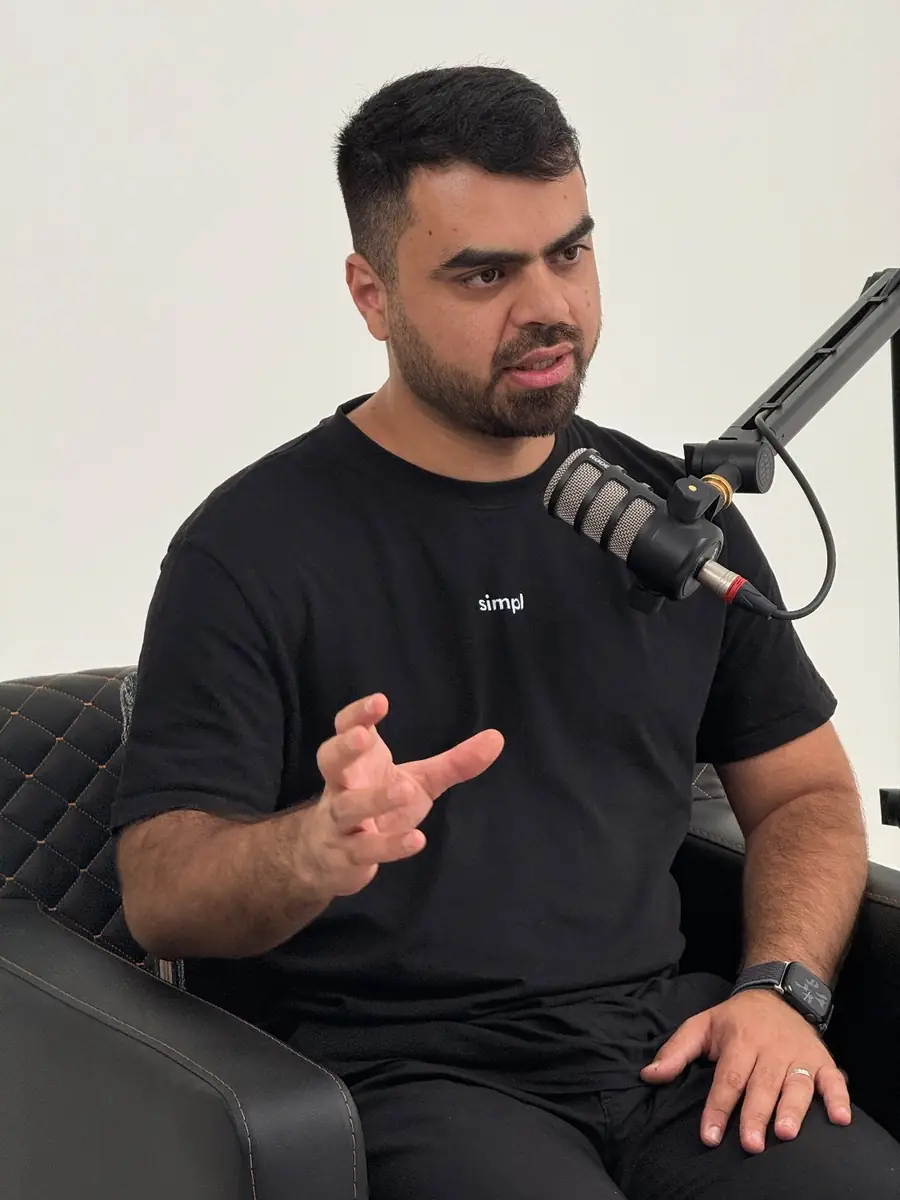
Ahmed Yusuf is a designer and business owner, and he hosts the show. He researches every guest himself, runs every conversation, and reads every sponsor message personally. When he recommends something, his audience takes it seriously.
Ahmed Yusuf has spent more than ten years building and running businesses across several fields. He founded Simpl Studio, a branding and creative studio, and Shklet, which works in food and drink. That background in branding, design and business development is what he brings into every conversation.
I was born in Halabja and grew up in Sulaymaniyah. I am a civil engineer, a graduate of the University of Sulaymaniyah. I do not work as an engineer any more — I have a few other projects instead.
When I was 13 my parents bought me a camera. That is where it started: I taught myself photography, then editing in Photoshop, and little by little, design. Design turned into a skill, then into the thing I actually do.
From year eight at school I was volunteering with local and international NGOs. I have always wanted to be part of something, or to build something that mattered.
At university, alongside my degree, I founded the engineering organisation ENGO — engineers and engineering students who organised and ran engineering activities. I started it as founder and president with five friends, and we grew it to more than 100 members over four years of work in the field.
With a few friends I also bought into the Dreams institute while I was still a student. My share was $3,300. We ran it for five years and it never really worked — we had no real business experience, and then Covid came. We had to sell it. Five years of work, and both the time and the money were gone. That was my first real loss.
After university I worked as an engineer for six months and quickly decided engineering was not for me. Then I took a bigger risk — my family and I moved house to Erbil to go into business with someone. One year. One small bedroom, sleeping on a mattress, no washing machine, no cupboards, just a fridge and a small cooker. None of it saved the business. I came back to Sulaymaniyah $5,000 in debt. It was a very hard year — and I got a real education out of it.
I did not rush the comeback. I freelanced for a while, tried a couple of things, slowly got back on my feet and paid the debt off. In February 2024 I opened a small office and started Simpl Studio on my own. The name came from what I believe about the work — design should be simple, ideas should be simple, and a business should be simple too. Simpl was not easy either; plenty of months we went into the next one with no profit. But I was sure it was the right work for me.
At the start of 2025 my brothers and I set up Shklet. We started with $5,000, bought a motorbike, kitted it out and had one employee. A month later, during Ramadan, people were queuing for hours and we could not keep up. Today it is 3 branches, 2 prep halls, 2 warehouses and more than 18 staff.
In September 2025 I started the Founders podcast. There was no real Kurdish-language business content, or very little of it, so I made it myself.
I am 30. I speak four languages. I work in brand design and strategy, photography, videography and marketing. There is still a long way to go, and I feel like I am only just starting.
Ahmed's answers, in his own words.
Running several different businesses at once without the quality of any of them dropping. Right now that is a design studio, a confectionery brand and a podcast. Each one wants your whole head.
The hardest part is being present in all three without burning out and walking away — I work 10 to 12 hours a day. In creative and design work especially, the hardest thing is consistency. There is no rule that says every month turns a profit, or that every month is the same. There are good months and bad months, and you have to know how to keep a grip on it without losing your focus.
Anything you want to start has its own difficulty. With the ENGO engineering organisation at university we had nothing — no money, no premises, no experience worth the name.
We bought into the Dreams institute with no real business experience, and then Covid and that inexperience forced us to sell it.
With Simpl, the hard part was that it was the first time I had put in an office of my own: rent, salaries, buying what we needed. At that point all I had was a phone and a computer.
With Shklet we had very little money, and I was running another business at the same time. We knew nothing about food and drink — we learned all of it from zero by trying.
The obstacles were the same each time: not much money and not much experience. But wanting it, and sticking at it, is what made the work hold.
I would not call it mockery, but the people close to you always want you to stay in the safe zone. When I wanted to go to Erbil they told me not to — stay where you are, stay safe, do not take the risk.
When I was doing design work they asked why I was not working as an engineer. When we started Shklet they asked how I was going to keep up with all of it — you are an engineer and a designer, what are you doing selling things off a cart?
And when I decided to set up Simpl Studio, I had been working alone off a laptop and my phone. It was a big, hard step. But from the start I knew that one day the work would hold.
Being visible as a designer and making content, so people knew I did branding and design. That is what grew my own personal brand, and then led to Simpl Studio — nearly every Simpl client has come through word of mouth and through that personal brand.
With Shklet it was two things together: a good product and different marketing. We did the work in a different way, and it got to the point where people queued for hours to try it.
Founders was real conversation and a defined niche — there was no podcast that talked about everything; it only tells true business stories, honestly. Everything I have built is specialised. I do not try to be in all of it.
The worst was the Erbil business. My family and I moved house to Erbil to build something. For a whole year we lived in a very small flat — one bedroom, sleeping on a mattress, no washing machine, just a fridge and a small cooker. At night the office room became the sitting room. Away from family, away from our own city. The business did not take. We kept going to the last minute, then made the hard, right decision to come back.
The best was Ramadan 2025, with Shklet. We had started a few months earlier on a three-wheeled bike. We believed in the product, but you are never completely sure. When Ramadan came, people were queuing for hours. That was when I felt the business had worked.
Simpl solves the problem that most businesses in Kurdistan have no proper identity — they exist, but they are weak at looking professional and getting their message across, and that loses them customers and trust.
Shklet fills a real gap — high-quality confectionery with a good design that fits into your ordinary day: not expensive, not complicated. At the same time we want to build a Kurdish brand we will be proud of later.
Founders solves the absence of real business content in Kurdish — people want to learn and to hear true stories in their own language, and there was very little of that.
At Simpl we help businesses look professional and say what they mean clearly — brand identity, logos, campaigns, video, social media, packaging, and everything to do with design, from finding the name through to a finished brand.
At Shklet we make simple, high-quality confectionery — milk and chocolate — sold from our kiosks, in a way that gives you a good moment in your day.
At Founders we host business owners and have long, honest conversations. We tell their real story — not just the success, but the actual journey behind building the thing.
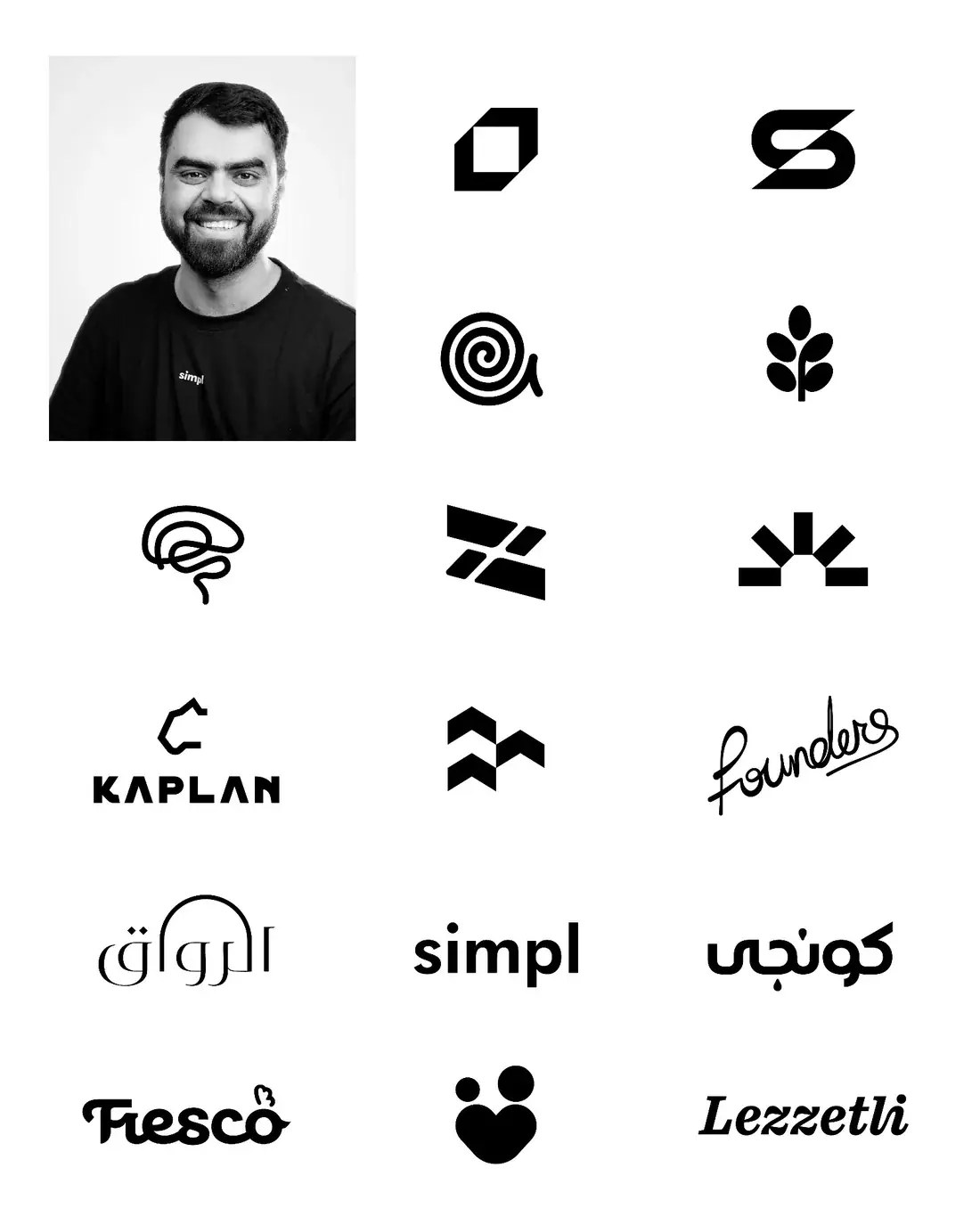
Some of the brands and marks Ahmed and the Simpl Studio team have designed.
Writing on business, brand, and what the show keeps teaching us.